Diwali 2026 is on Sunday, 8th November 2026. Diwali, also known as Deepavali or the Festival of Lights, stands as one of the most cherished and widely celebrated festivals in Hindu culture. This five-day celebration illuminates homes, hearts, and communities across the world, symbolizing the eternal triumph of light over darkness, good over evil, and knowledge over ignorance.
What is Diwali? Understanding the Festival of Lights
Diwali derives its name from the Sanskrit word “Deepavali,” meaning “a row of lights.” Celebrated during the Hindu lunisolar months of Ashvin and Kartika (typically between mid-October and mid-November), this ancient festival brings together families and communities in a spectacular display of lights, colors, and joy. In 2025, the main Diwali celebration falls on October 20-21, marking an auspicious time for spiritual renewal and prosperity.
The Rich Mythology Behind Diwali
The Ramayana Connection
For northern Indian Hindus, Diwali celebrates the return of Prince Rama to his kingdom of Ayodhya after 14 years of exile. According to the ancient 3,000-year-old epic Ramayana, Lord Rama returned victorious with his wife Sita and brother Lakshman after defeating the demon king Ravana. Wikipedia
The citizens of Ayodhya lit rows of clay lamps (diyas) to welcome their beloved prince home, creating a tradition that continues to this day. This story embodies the core message of Diwali: the victory of righteousness (Dharma) over evil (Adharma).
Other Sacred Stories
Different regions and faiths associate Diwali with various mythological events:
- Lord Krishna’s victory over the demon Narakasura, freeing people from tyranny
- In West Bengal, the day honors Goddess Kali, symbolizing the destruction of ignorance
- For Jains, Diwali marks Lord Mahavira’s attainment of nirvana
- Sikhs celebrate Bandi Chhor Divas, commemorating Guru Hargobind’s release from imprisonment
The Five Days of Diwali: A Complete Celebration
Day 1: Dhanteras – Welcoming Prosperity
The festival begins with Dhanteras, dedicated to Lord Dhanvantari and Goddess Lakshmi. This day is considered auspicious for purchasing gold, silver, and new utensils, symbolizing wealth and prosperity. Club Mahindra
Day 2: Naraka Chaturdashi (Choti Diwali)
Also known as Choti Diwali or Small Diwali, this day commemorates Krishna’s victory over Narakasura. Families perform early morning oil baths and light diyas to ward off evil spirits.
Day 3: Lakshmi Puja – The Main Festival
The third day represents the main Diwali celebration. Devotees worship Goddess Lakshmi, the deity of wealth and prosperity, performing elaborate pujas in the evening. Homes are adorned with countless diyas, creating breathtaking displays of light.
Day 4: Govardhan Puja
This day honors Lord Krishna’s lifting of Mount Govardhan to protect villagers. In some regions, it’s celebrated as Annakut, offering a mountain of food to deities.
Day 5: Bhai Dooj
The festival concludes with Bhai Dooj, celebrating the sacred bond between brothers and sisters, similar to Raksha Bandhan.
Diwali Decorations: Creating Festival Magic
Rangoli – Colorful Floor Art
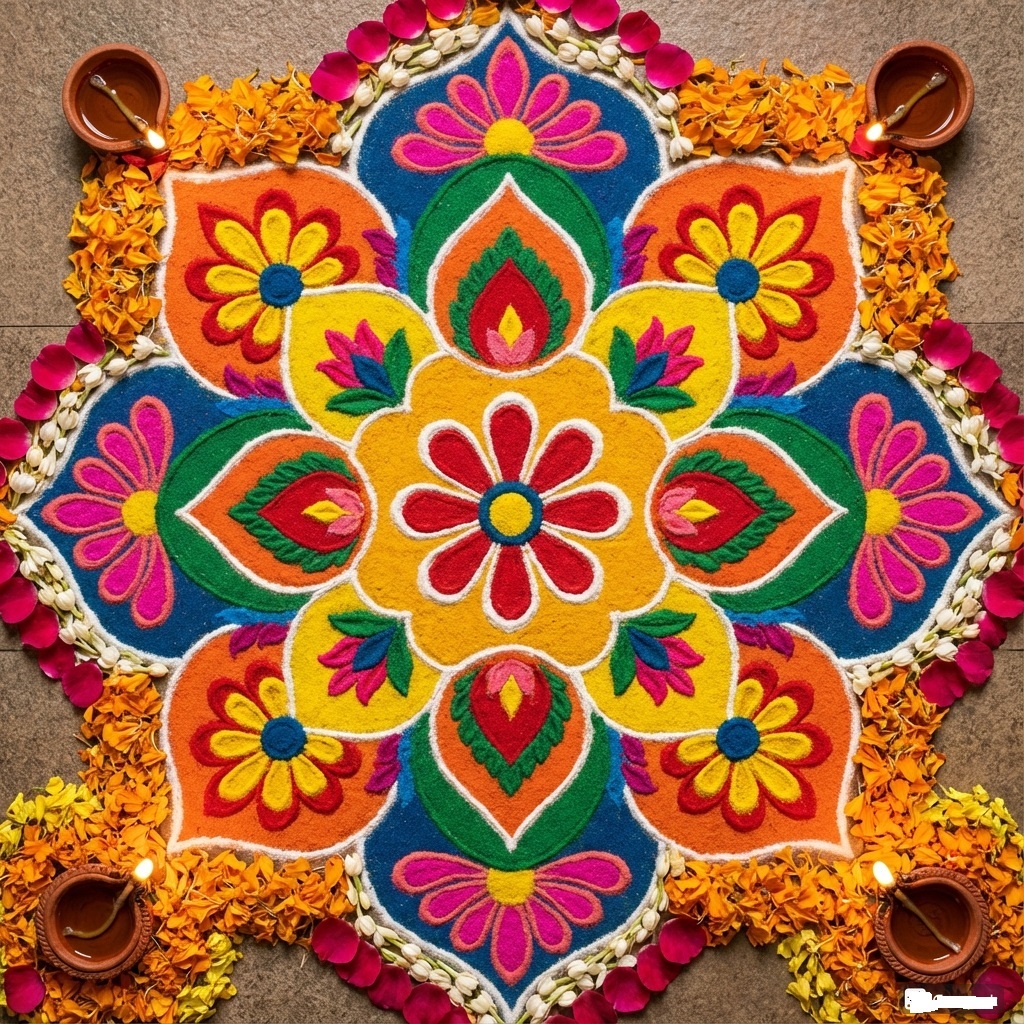
Rangoli designs serve as the centerpiece of Diwali decorations. These intricate patterns created with colored powders, rice, or flower petals welcome Goddess Lakshmi into homes. Traditional motifs include lotus flowers, peacocks, geometric patterns, and diyas.
Diyas and Lighting
Clay diyas (oil lamps) remain the heart of Diwali celebrations. Families place these earthen lamps along windowsills, doorways, and courtyards, creating a warm, inviting glow. Modern celebrations also incorporate:
- String lights and fairy lights
- Decorative lanterns
- LED candles
- Brass and silver diyas for special pujas
Home Decoration Ideas
Transform your home for Diwali with these decoration ideas:
- Create a toran (decorative door hanging) with marigold flowers
- Design elaborate rangoli patterns at the entrance
- Arrange diyas in geometric patterns
- Hang paper lanterns in vibrant colors
- Use fresh flowers like marigolds and roses
- Display brass bells and traditional items
Celebrating Diwali: Traditions and Customs
Cleaning and Preparation
Weeks before Diwali, families engage in thorough spring cleaning, symbolizing the removal of negativity and preparation for new beginnings. Homes are whitewashed, decluttered, and beautifully decorated.
Lakshmi Puja Rituals
The evening Lakshmi Puja involves:
- Lighting diyas and incense
- Offering flowers, sweets, and fruits
- Chanting mantras and prayers
- Seeking blessings for prosperity and wisdom
Fireworks and Celebrations
While fireworks have become synonymous with Diwali celebrations, many communities now promote eco-friendly alternatives to reduce pollution and protect the environment.
Festive Foods
Diwali brings an array of delicious traditional sweets and savory snacks:
- Ladoos, barfi, and halwa
- Samosas and pakoras
- Gulab jamun and jalebi
- Dry fruits and nuts
New Clothes and Gift Exchange
Wearing new clothes symbolizes fresh beginnings. Families exchange Diwali gifts, sweets, and dried fruits, strengthening bonds and spreading joy.
The Spiritual Significance of Diwali
Beyond the lights and festivities, Diwali holds deep spiritual meaning. It represents:
- Inner illumination – awakening the divine light within
- Renewal – letting go of past negativity
- Unity – transcending barriers of caste, creed, and culture
- Prosperity – both material and spiritual wealth
- Knowledge – dispelling ignorance with wisdom
National Geographic describes Diwali as “India’s most important festival of the year—a time to celebrate the triumph of light over darkness, knowledge over ignorance, and good over evil.”
Diwali Worldwide: A Global Celebration
Today, Diwali is celebrated globally by millions of Hindus, Sikhs, Jains, and Buddhists. Major celebrations occur in:
- India, Nepal, and Sri Lanka
- United Kingdom and Europe
- United States and Canada
- Southeast Asia (Singapore, Malaysia, Fiji)
- Australia and New Zealand
Many countries now recognize Diwali as an official holiday, showcasing the festival’s universal message of hope, light, and goodness.
Eco-Friendly Diwali: Celebrating Responsibly
Modern celebrations increasingly focus on sustainable practices:
- Using clay diyas instead of electric lights when possible
- Avoiding loud fireworks or choosing eco-friendly alternatives
- Making organic rangoli with flower petals
- Donating to those in need
- Reducing waste and conserving resources
Conclusion: Embracing the Light Within
Diwali reminds us that no matter how dark the world may seem, light will always prevail. As we light our diyas and celebrate with loved ones, we reaffirm our commitment to goodness, knowledge, and compassion. This Festival of Lights encourages us to be the light we wish to see in the world, spreading joy, prosperity, and hope to all.
Whether you’re celebrating with traditional rituals, modern decorations, or simply taking a moment to reflect, Diwali offers everyone an opportunity to illuminate their lives and embrace new beginnings. May your Diwali be filled with light, laughter, and countless blessings!
Happy Diwali! Shubh Deepavali!